There are many notable issues about 4PGP, which launches on Swap and Swap 2 at present – the enduring (however unlicensed) Nineteen Nineties F1 automobiles, the 120Hz visuals (on Swap 2) and the four-player split-screen mode – however I’ve to confess that, as a seasoned arcade fan, the involvement of the legendary Kenji Sasaki (Sega Rally, Sega Rally 2, Sega Touring Automobile Championship, Star Wars Racer Arcade) as an advisor on the challenge is what actually made me sit up and take discover.
Eager to be taught extra concerning the origins of this title and Sasaki’s affect on its closing kind, I used to be fortunate sufficient to talk to Quanah Sugiyama (4PGP Venture Supervisor at writer 3goo), Jonathan Marolle (Recreation Director at developer Imaginative and prescient Reelle) and even the good man himself, Kenji Sasaki (Venture Advisor).
Nintendo Life: Are you able to give us some background in your crew’s racing recreation pedigree? What notable titles have the core crew labored on beforehand?
Quanah Sugiyama: As a writer, 3goo brings in depth expertise in advertising and releasing racing video games in Japan, together with acclaimed franchises akin to Gear.Membership Limitless and WRC. Our portfolio spans a variety of racing genres—from hardcore simulation titles like Rennsport to open-world experiences akin to Check Drive Limitless Photo voltaic Crown.
As well as, our director, Jonathan, is a veteran developer with over 20 years of expertise in racing recreation improvement, having labored on main franchises together with Check Drive Limitless, The Crew, and Gear.Membership Limitless. With this mixed experience in improvement, publishing, and international racing franchises, we’re extremely assured in our capacity to each create and efficiently carry racing video games to market.
Nintendo Life: F1-based racers are available in all styles and sizes, with some going for intense realism whereas others are extra arcade-like. The place does 4PGP sit on this scale, and what titles have impressed it instantly?
Quanah Sugiyama: From a gameplay standpoint, 4PGP firmly embraces its arcade roots. The controls are easy and intuitive, complemented by a turbo system for fast bursts of pace. On the identical time, it’s designed to ship a real formulation racing expertise, the place success is determined by well-timed braking, exact steering, and studying the optimum racing line.
Visually, we aimed for a cautious stability. The sport captures the modern, high-speed look of actual formulation automobiles whereas including a vibrant, approachable type. We made positive to not lean too far right into a cartoonish look, as to maintain the “coolness” issue of formulation racing intact.
Nintendo Life: You are clearly aiming at providing an accessible, family-friendly expertise with 4PGP, however how are you ensuring will probably be difficult sufficient to tempt style veterans?
Quanah Sugiyama: Similar to our favorite basic arcade racers, 4PGP follows the timeless philosophy of “straightforward to choose up and play, but difficult to grasp.” Gamers start on decrease problem settings, the place prime speeds are lowered, and the dealing with is extra forgiving, permitting anybody to leap in and have enjoyable instantly.
At increased problem ranges, although, the sport turns into much more demanding: automobiles are considerably sooner, rivals extra aggressive, and even a small mistake can value you the complete race. Really mastering the sport requires studying every monitor inside and outside, sustaining focus all through intense twists and turns, and elegantly managing each tyre put on and the turbo gauge.
Nintendo Life: You have gone for traditional ’90s liveries for most of the included automobiles. What made you decide this period of F1 specifically?
Jonathan Marolle: On the earth of motorsports, some automobiles are actually timeless. Throughout generations, they’re immediately recognisable—even to those that aren’t racing followers or lifelong petrolheads—because of their legendary liveries and unmistakable silhouettes. The drivers who piloted these machines turned icons in their very own proper, identified world wide by individuals of all ages, just like Hollywood actors or pop stars.
This golden period suits the sport completely. It captures the spirit of Nineteen Nineties arcade racing, celebrating iconic automobiles that everybody is aware of and remembers. On a private degree, these machines maintain a particular place for me—I genuinely love them, and that zeal is woven instantly into the sport.
Nintendo Life: For gamers raised on, say, Mario Kart 8 and Mario Kart World, what would you say 4PGP provides that makes it value a glance?
Jonathan Marolle: Mario Kart 8 and Mario Kart World are unbelievable video games. I play them each week with my sons, and so they’re all the time a blast. However if you’re on the lookout for intense racing with actual automobiles, there’s merely nothing fairly like that out there at present. 4PGP goals to fill that hole. It delivers the moment enjoyable, accessibility, and aggressive problem of a kart racer, however set on the earth of motorsport, designed from the bottom up for 4 gamers.
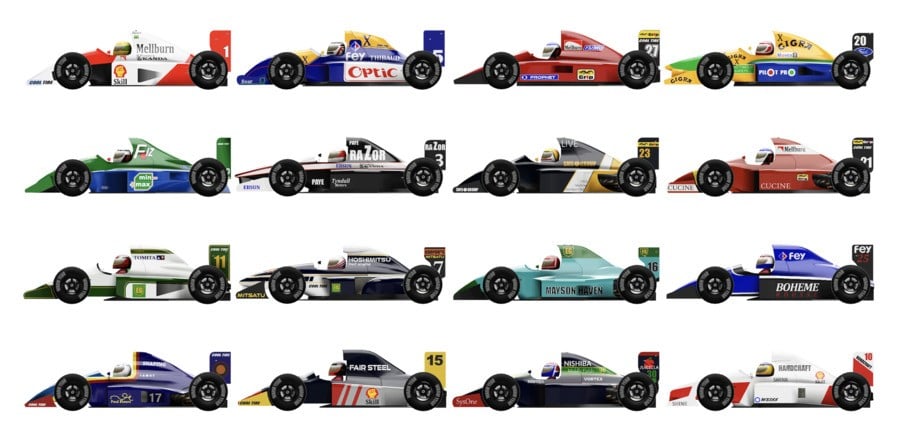
Additionally, talking as somebody who was as soon as a toddler himself, I do know that children don’t like being handled like children. So, giving them the choice to race cool, semi-realistic automobiles, slightly than go-kart-type autos geared in direction of a youthful demographic, is one thing I feel youthful generations will actually admire.
Nintendo Life: What has it been like working with a style legend like Kenji Sasaki, and the way deep has his involvement been with the sport? Did Sasaki-san demand any sweeping modifications to the sport at any level throughout its improvement interval, for instance, and was he concerned from the very starting?
Quanah Sugiyama: Sasaki-san has been on board with us for the reason that challenge formally kicked off, offering invaluable perception throughout a variety of areas, together with UX, graphics, controls, recreation stability, and music, which helped make the sport really feel like an genuine Nineteen Nineties arcade racer. Whereas we had prototypes previous to his involvement with the racing mechanics, tracks and autos fleshed out, the UI, HUD, and general color scheme underwent main remodeling below his supervision.
Nintendo Life: How did Tomoyuki Kawamura change into concerned, and what has it been like working with him on the sport’s music? Did he merely provide compositions of his personal, or did you make solutions primarily based on his earlier work in titles like Sega Rally and Virtua Racing?
Quanah Sugiyama: Kawamura-san was launched to us by Sasaki-san. The 2 have labored along with on many tasks, and Sasaki-san felt he could be the proper composer for the aforementioned authenticity we have been attempting to seize. Whereas we didn’t intend to instantly imitate the soundtrack of any particular previous title, Sasaki-san did advise us that Kawamura-san had beforehand labored on Sega’s INDY 500, which had a tone just like what we have been on the lookout for, and inspired him to attract on his recollections from that interval for composition.
Nintendo Life: What facet of 4PGP has been the toughest to get proper?
Jonathan Marolle: Body charge was the most important technical problem on Nintendo Swap. Sustaining a clean 60 fps with 4 gamers, in each handheld and docked modes, was important to help the fast-paced gameplay that defines arcade racing video games of this period. On the identical time, quite a lot of effort went into making 4PGP really feel technically genuine, significantly in areas such because the physics engine and graphics. Within the Nineteen Nineties, {hardware} limitations compelled builders to depend on intelligent tips and simplified physics to convey the movement of automobiles, whereas early 3D arcade boards have been unable to render massive numbers of textured polygons. I deliberately embraced the identical strategy to seize the essence of what made these video games so enjoyable and accessible, adopting related constraints—low-poly fashions, a restricted variety of low-resolution textures, and the absence of filtering or superior post-processing—to recreate that particular feel and look.
Nintendo Life: What aspect of the sport do you assume gamers are going to be most stunned by?
Jonathan Marolle: I feel gamers can be most stunned by simply how clean and quick the sport feels. Like a basic arcade expertise, you possibly can bounce in and be racing inside seconds—we’ve lowered loading time to mainly nothing, and there may be hardly any downtime between races; the tempo is relentless.
On prime of that, the efficiency is rock strong. The sport runs flawlessly at 60 fps on each Nintendo Swap and Nintendo Swap 2, even with 4 gamers, with no frame-rate drops. The Nintendo Swap 2 Version pushes issues even additional, providing 120 fps/Full HD and 60 fps/4K settings. The mixture of instantaneous entry, clean efficiency, and excessive visible constancy makes the sport really feel extremely responsive—and that’s one thing gamers received’t anticipate till they expertise it firsthand.
Nintendo Life: What are the important thing variations between the Swap and Swap 2 variations of the sport?
Quanah Sugiyama: As Jonathan talked about within the aforementioned query, the body charge and determination have improved dramatically. The opposite main characteristic is help for the Swap 2’s GameShare characteristic. With this, as much as 4 gamers can play domestically or on-line on their very own units, utilizing just one copy of the sport. It’s a good way to share the enjoyable with buddies close to and much.
Nintendo Life: What has it been like factoring in Swap 2 options, like 120fps and GameChat?
Quanah Sugiyama: GameShare, being a brand-new characteristic on the Nintendo Swap 2, was fairly the problem to develop for.
As one Nintendo Swap 2 system must render as much as 4 screens directly, we needed to strike the proper stability in optimisation, the place the sport can run at an honest pace with out sacrificing the fps and determination an excessive amount of.
Audio was one other problem we confronted, as the sport needed to generate completely different sound results (acceleration, braking, crashing, and so forth.) for every participant’s automobile on separate units when streaming. With a conventional setup, the entire sound results could be taking part in on the entire gamers’ units directly, so discovering a workaround was essential.
For 120 fps, the implementation was fairly easy, because the Swap model was already very well-optimised, operating at a relentless 60 fps regardless of the technical limitations of the system.
Nintendo Life: Sasaki-san, what did you assume if you have been first approached about contributing to 4PGP?
Kenji Sasaki: To supply some background, I first met Nicolas, the CEO of 3goo, almost 30 years in the past when he was a correspondent for EDGE journal and interviewing me through the improvement of Sega Rally. I nonetheless bear in mind being caught off guard by his sharp questions and really particular requests concerning racing and driving video games—I even discovered myself puzzled at occasions.
After that, we might meet often each few years, and I adopted his profession as he went on to discovered 3goo and publish quite a few racing titles, so I had all the time hoped that we’d have the chance to work collectively sometime. When he finally approached me about serving as a particular advisor on 4PGP, I used to be genuinely delighted to obtain the provide.
Nintendo Life: How have your earlier video games influenced your enter into 4PGP? What classes would you say your profession has taught you on the subject of providing recommendation and enter on this type of recreation?
Kenji Sasaki: Since 4PGP’s objective was to [recreate] the sort of enjoyable present in Nineteen Nineties arcade racing video games on fashionable {hardware}, I took time to interrupt down what made the video games I’ve labored on so pleasant and determine the weather that basically stood out.
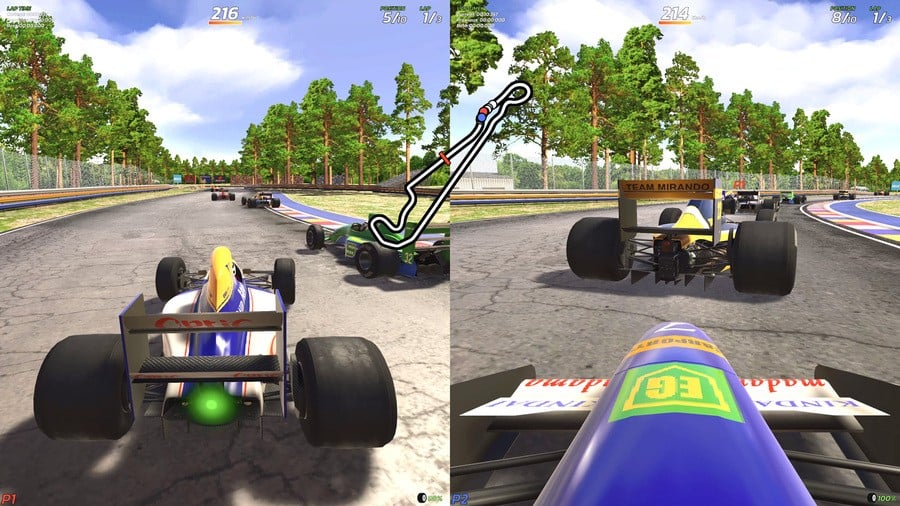
Though the event schedule restricted what could possibly be achieved in a short while, my objective was to carry as a lot of that “era-specific ambiance” into 4PGP as potential. With that in thoughts, I offered recommendation and route on visible creation and choice, in addition to the general building of components just like the background music, to assist the sport seize the texture of these basic arcade racers.
Nintendo Life: What points did you might have probably the most affect over throughout 4PGP’s improvement?
Kenji Sasaki: The important thing components I centered on have been the sense of pacing, the background music, and the general visible ambiance that evokes Nineteen Nineties arcade video games. Together with issues like menu and recreation stream design, we centered on making the expertise straightforward to grasp and making certain the sport progressed at a quick, satisfying tempo. I additionally tried to maintain my recommendation tightly centered on crucial factors, with the objective of enhancing the texture of the sport when performed and giving gamers a stronger sense of responsiveness and satisfaction.
Nintendo Life: What was it like working with Tomoyuki Kawamura once more?
Kenji Sasaki: Kawamura and I’ve collaborated on recreation improvement many occasions over the previous 30-plus years, and I contemplate him a real brother-in-arms from our days within the trenches of arcade recreation improvement. Due to that shared historical past, he understands my intentions instinctively, which made our collaboration extraordinarily clean and easy.
Nintendo Life: Many fashionable racing video games purpose for realism over accessibility. What benefit do you are feeling arcade-style racers provide over ‘critical’ simulations?
Kenji Sasaki: I feel the clear benefit is having the ability to benefit from the recreation casually and intuitively in a typical house play setting. With racing simulators, customary consoles and units usually can’t convey sufficient info, which may make them really feel troublesome or intimidating for basic gamers. Utilizing massive, immersive shows, motion-based cupboards, or VR could make the expertise extraordinarily reasonable and intuitive to regulate, however realistically talking, not many gamers have entry to that sort of setup but.
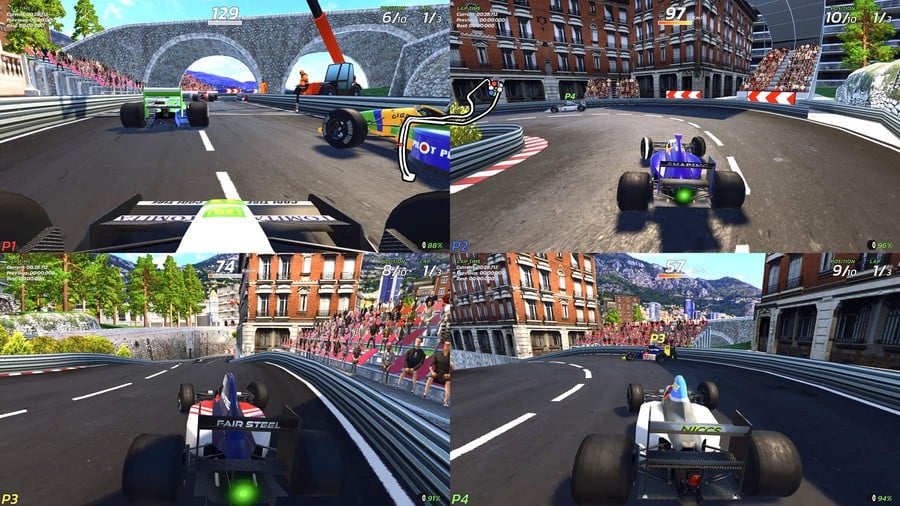
Nintendo Life: 4PGP’s characteristic set seems to put it in competitors with family-friendly racers like Mario Kart and Sonic Racing. What does the sport provide that these titles lack?
Kenji Sasaki: I feel there are individuals who have hassle connecting with the lovable, extremely stylised characters and overtly comical presentation usually present in these titles. For gamers who need a extra critical racing ambiance however really feel that full-fledged racing simulators are a bit too demanding or inaccessible, I feel there’s room for a recreation like 4PGP to fill that hole and meet that demand.
Nintendo Life: 4PGP is an unique title. Would you prefer to see studios like 3goo given the possibility to work with a number of the well-known arcade properties you helped create through the ’90s?
Kenji Sasaki: I don’t place a lot significance on particular IPs or manufacturers. So long as we will create a recreation we actually need to make—and one which gamers are on the lookout for—I’m open to any type or strategy. I’d like to make one other rally recreation, although.
Nintendo Life: Do you see your self contributing to extra video games sooner or later?
Kenji Sasaki: In fact, I’d like to stay actively concerned. If there may be demand, I’d like to work on business titles, however there are additionally extra private tasks and concepts that I want to problem myself with growing.

Damien has been writing professionally about tech and video video games since 2007 and oversees all of Hookshot Media’s websites from an editorial perspective. He is additionally the editor of Time Extension, the community’s latest web site, which – paradoxically – is all about gaming’s previous glories.