Subscribe to our publication
In entrance of me are two VR headsets. They’re virtually similar; each variations of the Pimax Crystal Tremendous, a high-end, tethered unit. Although for his or her near-indistinguishable look, they’re totally different in a single essential approach: one is fitted with QLED shows, and the opposite, Micro OLED.
My job for the previous couple of days has been to modify between the 2 headsets. Attempting one, then the opposite, and again once more, till my eyes harm. I’ve examined a variety of video games, carried out a number of assessments, and jotted down loads of notes alongside the best way. We’ll get to these, however in order for you the shortened model, right here it’s: Micro-OLED is great, with a number of caveats that I am going to go into larger element about beneath.
Associated articles
Function
Micro-OLED
50 PPD
57 PPD
Ultrawide
Pixels-per-degree
53
50
57
50
Decision per eye
3840 x 3552
3840 x 3840
3840 x 3840
3840 x 3840
Max. refresh charge
90 Hz
90 Hz
90 Hz
90 Hz
Discipline of view
116° horizontal
127° horizontal
106° horizontal
140° horizontal
Eye-tracking
Sure
Sure
Sure
Sure
All besides the Micro-OLED use a QLED (LCD with Quantum Dot) panel with a Mini LED backlight, which permits for native dimming—switching on and off a small zone of the backlight to enhance distinction. Each considered one of these optical engines is able to displaying a formidable image high quality and with wonderful brightness, however from my time with the 50 PPD and Micro-OLED choices, the latter actually takes the cake.
The Micro-OLED optical engine makes use of a Sony panel with a decrease vertical decision than the QLED choice—presumably the Sony ECX344A with an identical decision and 90 Hz refresh charge. The discount will not be noticeable, nevertheless, as a result of second-highest pixel-per-degree (PPD) score at 53 PPD. That is made doable by the decreased subject of view, which is the second-lowest of the 4.
PPD, pixel pitch, decision, and FoV all play a component within the total readability of a digital actuality headset. Consider it like a picture painted onto a folding fan: the broader the fan goes, the bigger the picture turns into, however the simpler it’s to identify the person brush strokes and creases that make it up. Open the fan solely three quarters of the best way and the picture seems to be a better high quality however you see much less of it. Pimax, and different VR producers, use various lens designs to stability between total FoV and readability.
For the Micro-OLED optical engine, Pimax makes use of specially-designed pancake lenses. Pancake lenses require loads of brightness—as Valve’s engineers advised me once I had a go together with the Steam Body, which additionally makes use of pancake lenses. Although brightness would not seem an issue with the Sony shows used on the Crystal Tremendous. The ECX344A is rated to 1,000 cd/m2, although not all of that’s making it by means of the pancake lenses to your eyeballs. I by no means thought to extend the brightness throughout testing, in any case, which is an effective factor, as on nearer inspection I already had the brightness set to 100%.
These pancake lenses are concave, which is slightly totally different to the ever-so-slightly convex lenses I am used to seeing with the Quest 3. I might guess partially as a result of magnification required for the tiny Micro-OLED screens.
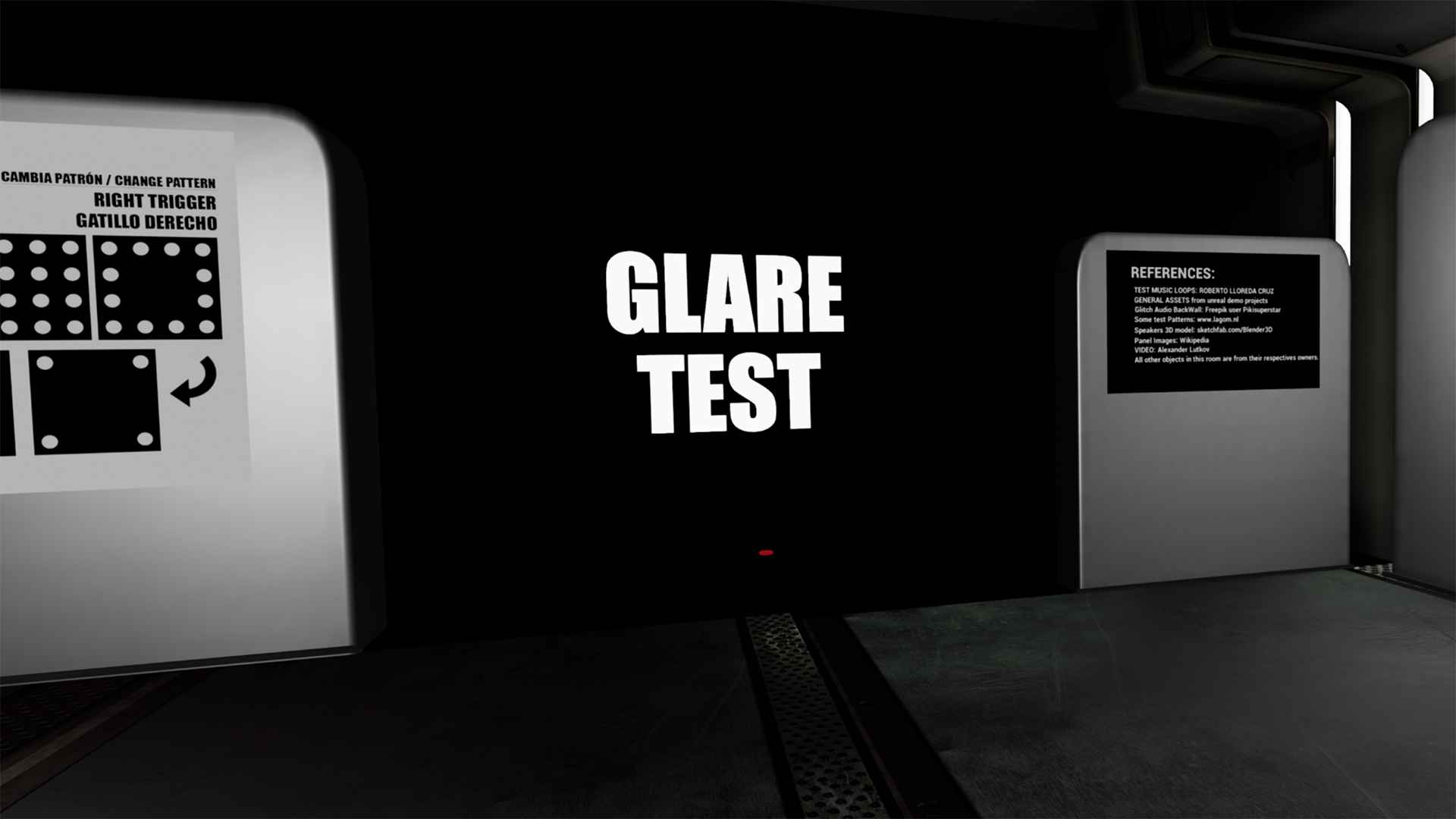
The Pimax has extra glare than the Quest 3 and QLED Crystal Tremendous, particularly in assessments that purpose to indicate any glare at its worst. In observe, it is not wherever close to as distracting because it appears, although is a particular draw back to the Micro-OLED optical engine in comparison with others.
The Micro-OLED optical engine solely weighs 231 grams in comparison with the QLED at 355 grams, although at any charge, it is not as compact or handy because the Quest 3. That is to be anticipated contemplating it is utilizing the identical shell because the non-pancake optical engines.
Associated articles
Picture 1 of two
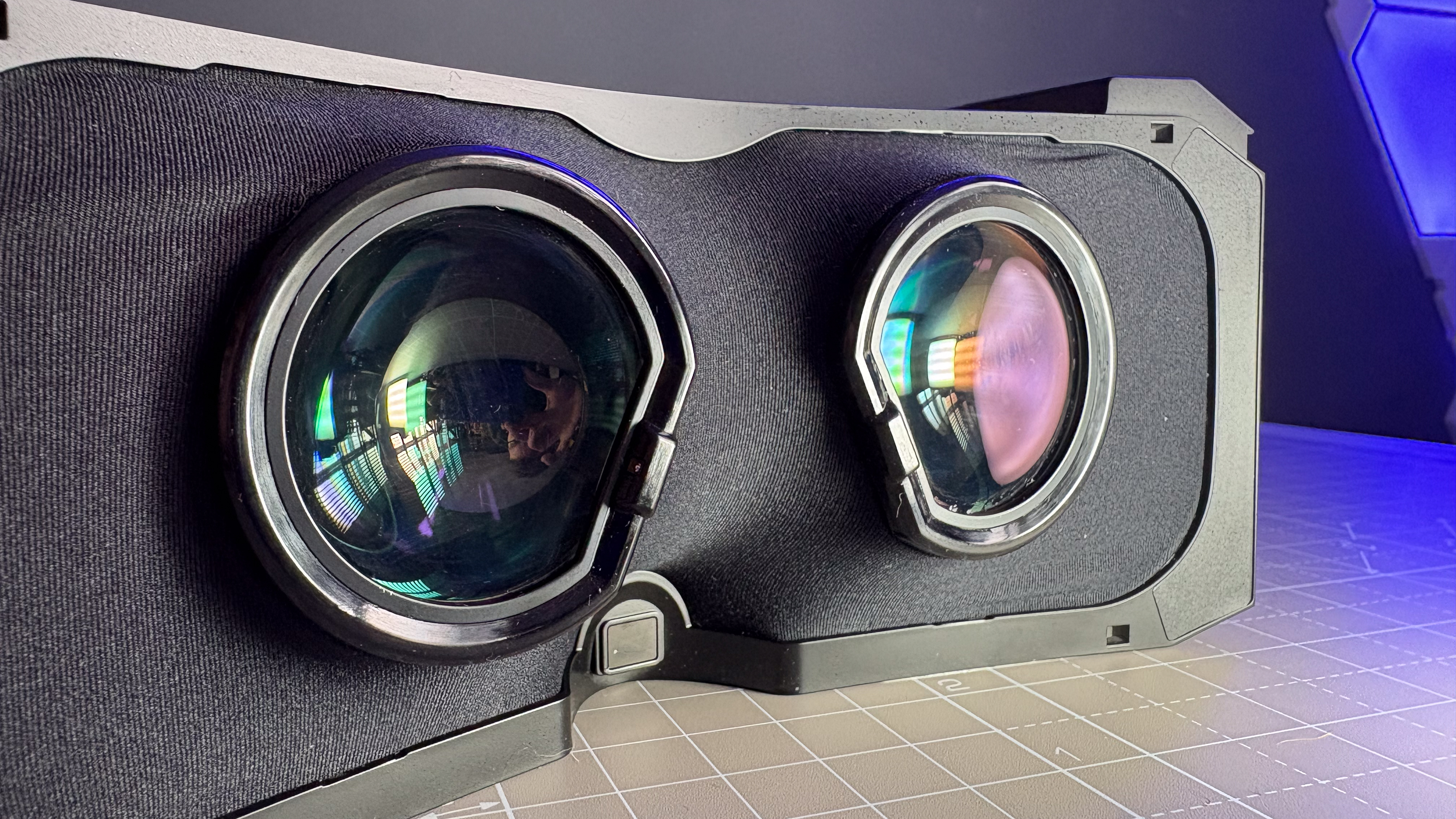
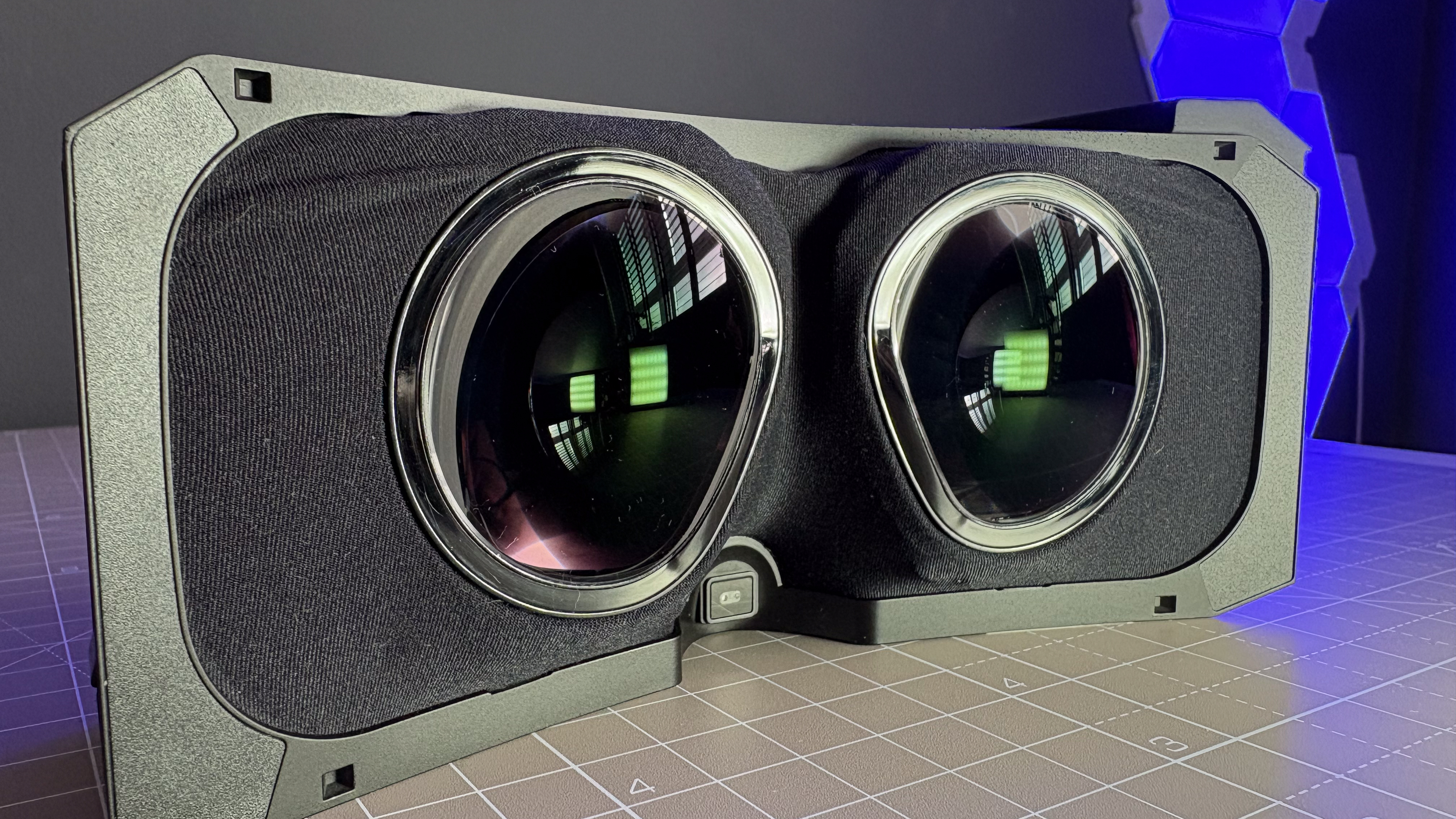
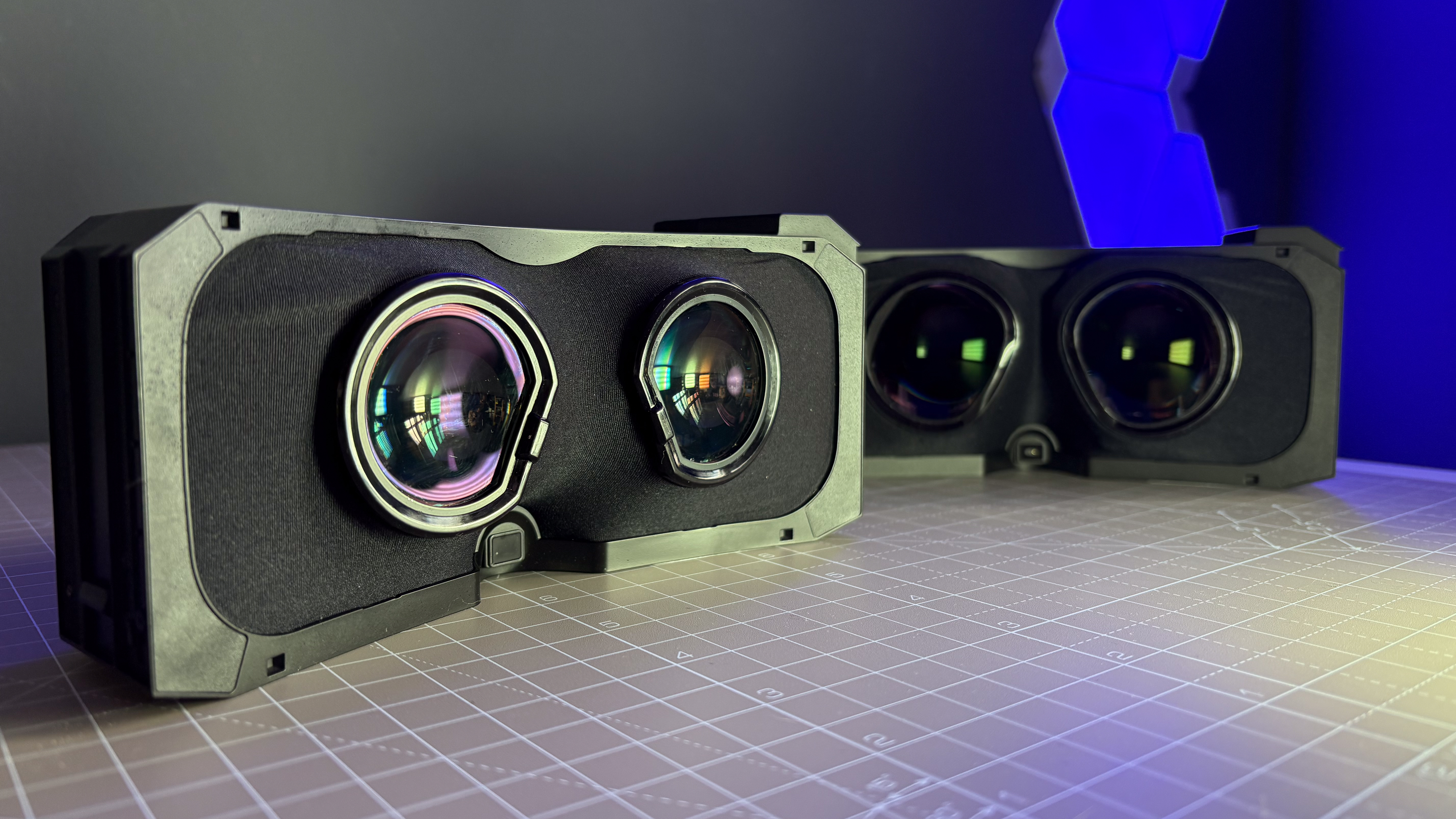
For the QLED choices, Pimax makes use of aspheric glass lenses. All three QLED variations use the identical panel, with the 57 PPD mannequin in a position to provide a better PPD with totally different lenses to the others. The Ultrawide, alternatively, is ready to enhance the FoV with the identical lenses and display because the 50 PPD mannequin by basically transferring the screens additional aside—decreasing what’s often known as stereo overlap.
Stereo overlap is the realm that’s lined by each left- and right-side imaginative and prescient. It is often offered as a share, which means the quantity of L/R overlap; ie ~86% on the Micro-OLED Crystal Tremendous. That is loads increased than the ~77% on the 50 PPD Crystal Tremendous, and as somebody that prefers extra stereo overlap than much less, principally for retaining my imaginative and prescient clear and my head straight, the Micro-OLED as soon as once more comes out on prime right here.
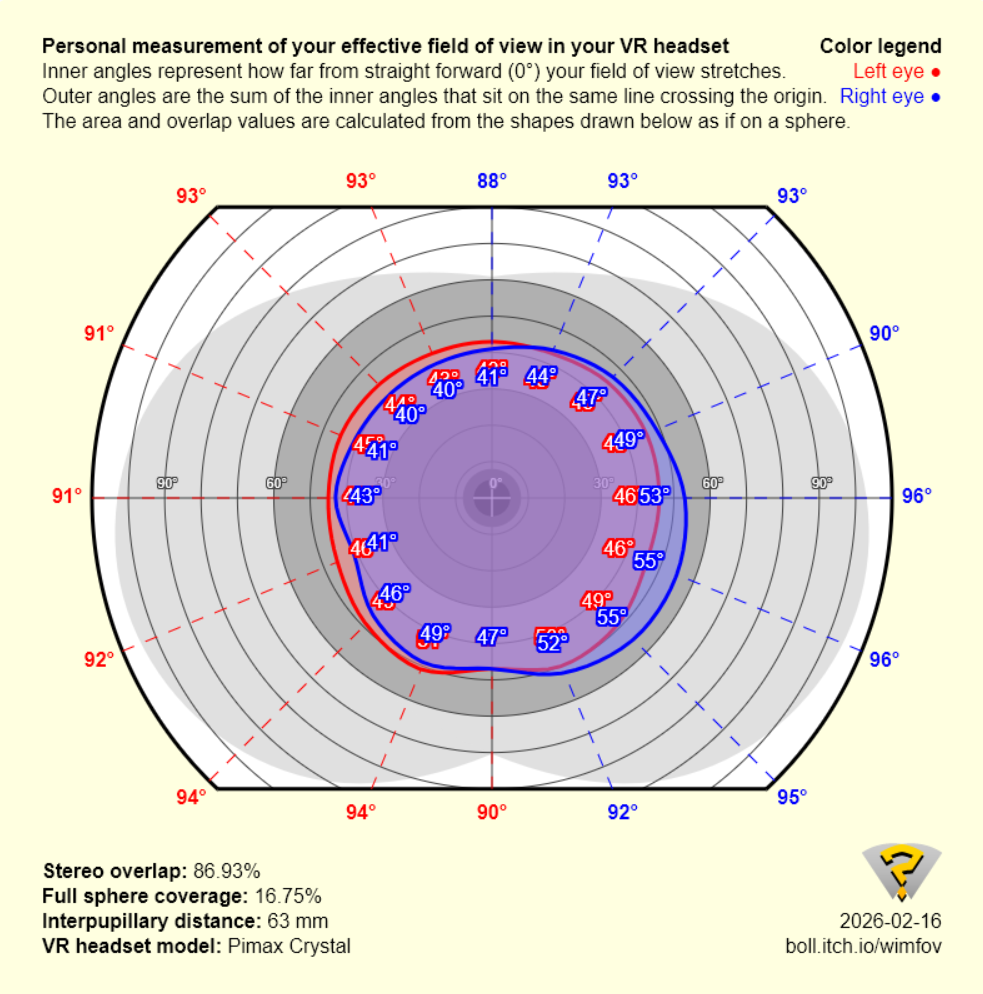
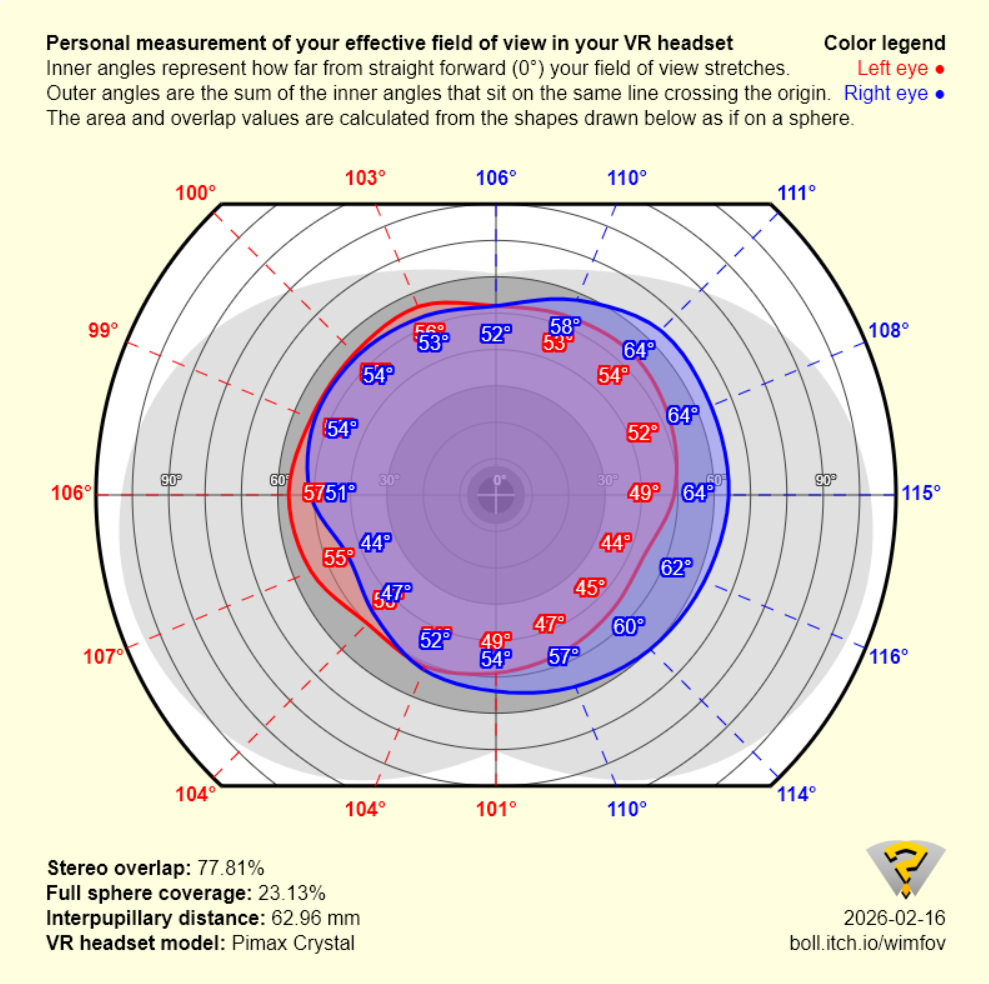
Checks for FoV, comparable to Wimfov (seen above), can have various outcomes from individual to individual. As such, my testing ought to be on the very least constant between the 2 headsets, if not essentially the identical as another person’s.
You could be much less liable to ocular mixups than me—maybe I’ve a larger susceptibility to what’s often known as binocular rivalry, or in easier phrases, unhealthy eyeballs—thus the 50 PPD QLED mannequin could provide loads of overlap. The Ultrawide mannequin goes one step additional once more with much less overlap. Nevertheless, I want the elevated stereo overlap of the Micro-OLED.
That is true regardless that I play racing video games in VR, which is among the greatest use circumstances for a large FoV. The added visibility turns out to be useful whenever you’re being overtaken by a late-braker or a serial shunter. But I do not race sufficient to justify transferring totally from Micro-OLED, which has a number of different large advantages.
One being no display door impact. You may chalk it as much as a mixture of all these aforementioned options, comparable to decision, PPD, and many others., but additionally the development of Micro-OLED. Manufactured instantly onto a silicon substrate, pixel density could be monumental on a tiny Micro-OLED show by comparability to bigger OLED and LCD panels.
The Sony ECX344A, as is probably going used right here (BOE additionally makes an analogous panel however Pimax names Sony right here), has a pixel pitch (the space between the centre of every pixel and the subsequent) of 6.3 µm. A regular 27-inch 4K monitor is 165 µm. To place it one other approach, a 27-inch 4K monitor has a PPI of 163, whereas the 1.3-inch ECX344A has a PPI of three,389. Even a a lot smaller LCD made for VR functions like BOE’s 5.46-inch 4K show has a PPI of 773.
A Micro-OLED may be very small however densely packed. A lot so {that a} human’s eyes aren’t excellent at making out the gaps between subpixels on a Micro-OLED like they may a standard monitor.
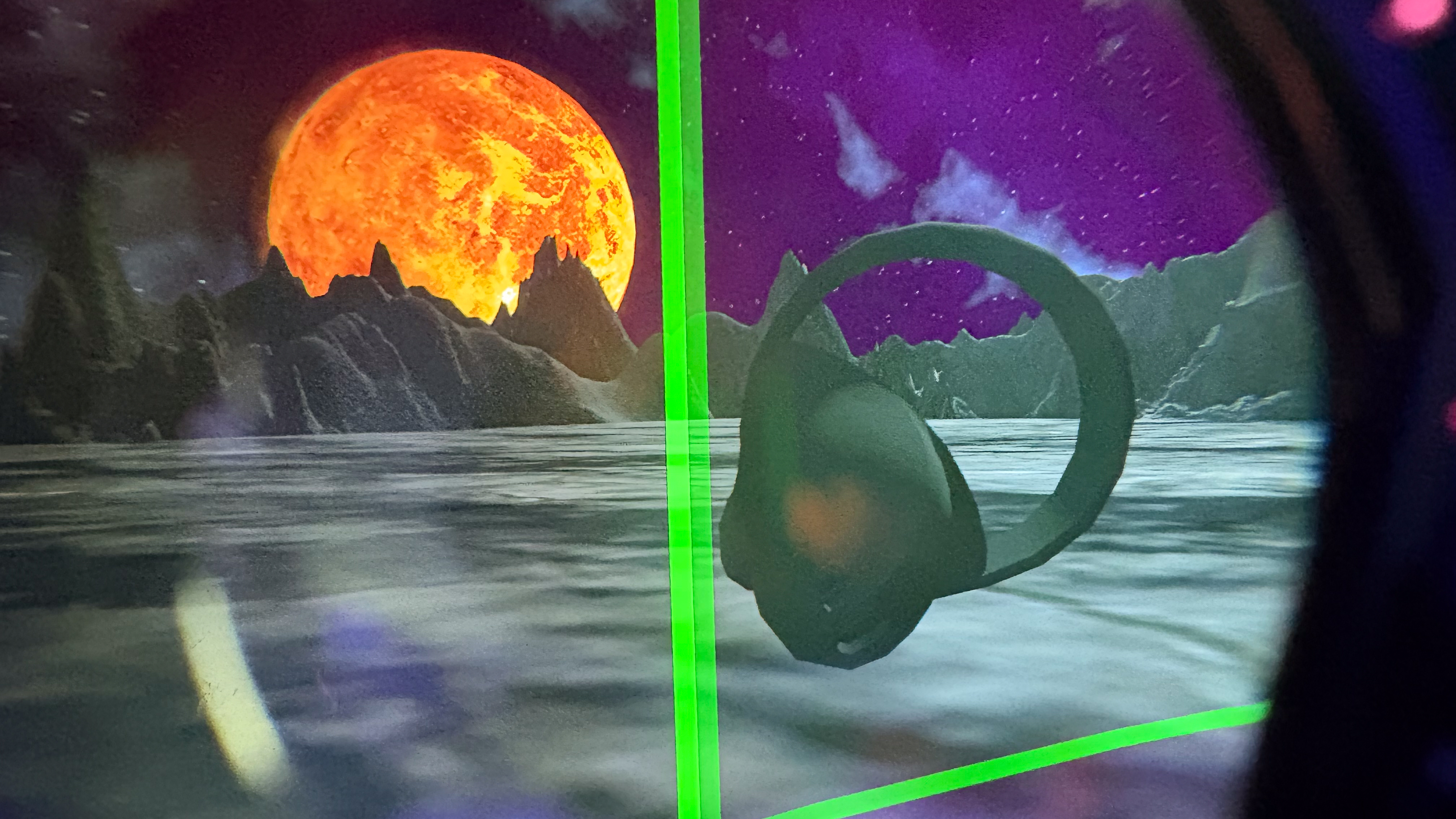
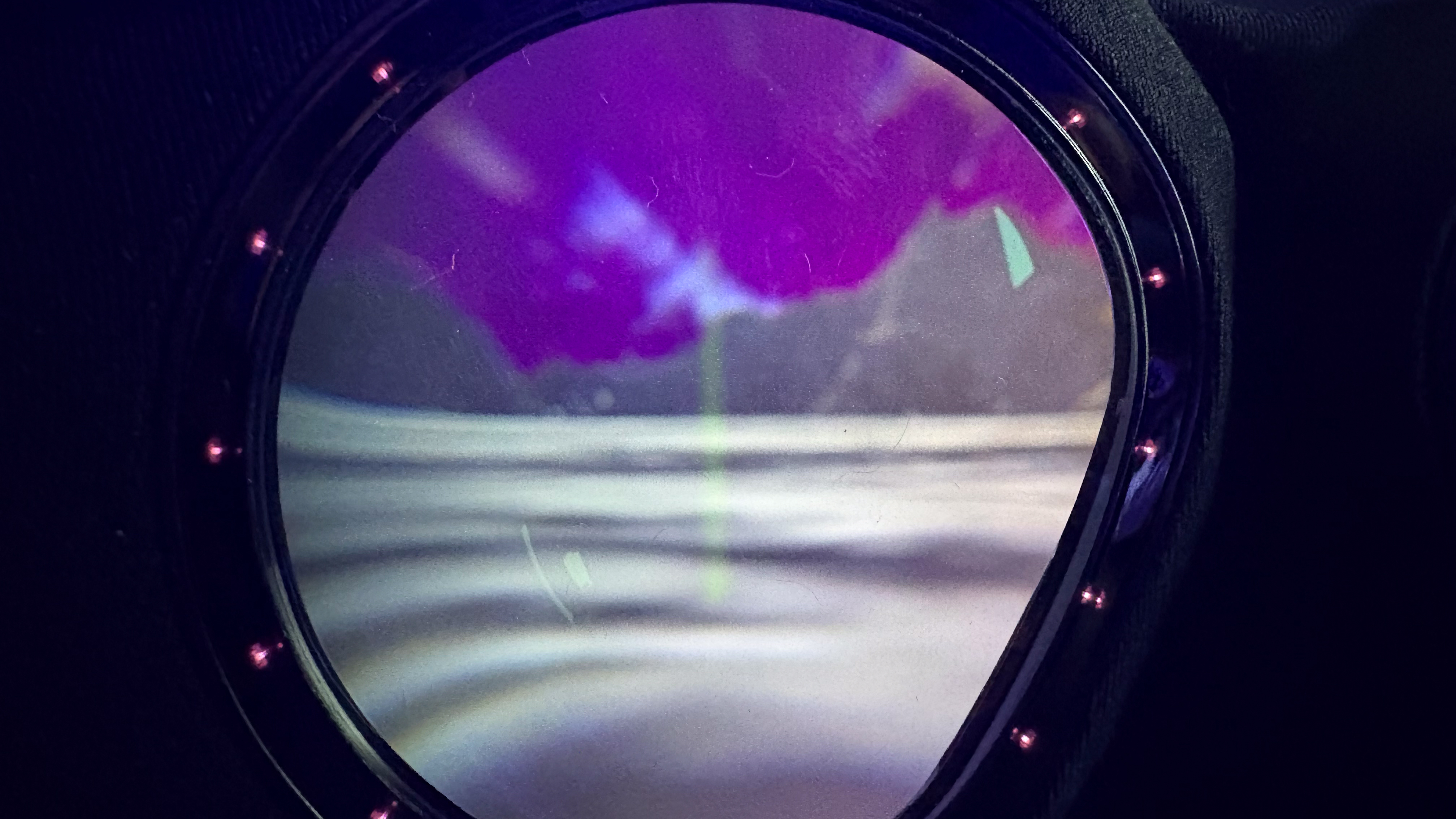
Look to the sky in Arizona Sunshine Remake whereas carrying the QLED Crystal Tremendous and there is apparent display door impact. In comparison with older technology headsets, and as a result of excessive decision supplied by all Crystal Tremendous fashions, this impact is not too unhealthy, and fewer noticeable whenever you’re taking part in the sport moderately than searching for imperfections as I’ve been. Nevertheless, with the Micro-OLED Crystal Tremendous, and even once I’m intently interrogating the scene, I see no signal of the display door. No traceable traces—nothing.
Look to the ground in the identical recreation, or to the inexperienced information that Pimax makes use of to warn you whenever you’re wandering out of your boundary, and you will spot some slight jittering on finer particulars on each QLED and Micro-OLED fashions. Nevertheless, it’s much less noticeable on Micro OLED than QLED.
Picture 1 of two
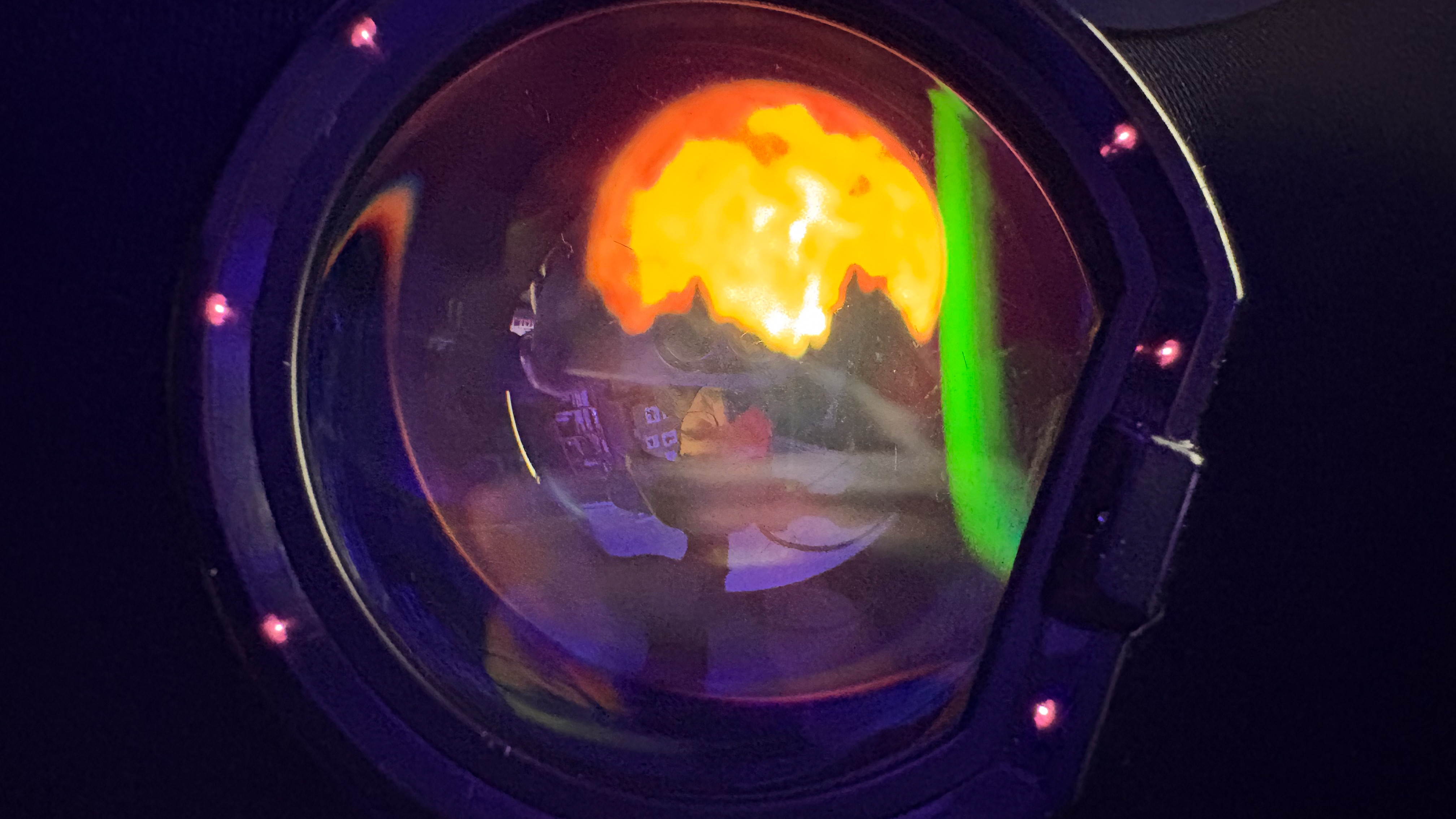
Then there’s vibrancy. Most know that an OLED panel naturally produces deep blacks, on account of the self-emissive nature of every pixel—basically, per-pixel lighting. Nevertheless, colors are additionally distinctive on an OLED panel and this Micro-OLED is not any totally different. It is noticeable together with white ranges and distinction. Inside vivid areas, resulting from its comparably giant lighting zones, the QLED optical engine washes out a great a part of any color. That is particularly noticeable on the Arizona Sunshine Remake icon in SteamVR, which is totally blown out on the QLED in comparison with the Micro-OLED, and that tracks all through the sunny recreation. Micro-OLED has no such washout.
Picture 1 of two

Now to come back crashing again all the way down to Earth. I saved myself at nighttime on the value tag for the Micro-OLED optical engine for the longest time, however I am all too conscious of it at present. It can set you again $1,199/£920. The Pimax Crystal Tremendous with the Micro-OLED is $2,199/£1,700, or with any QLED optical engine is $1,799/£1,393. So, the query is whether or not Micro-OLED is value an additional $400/£307?
I’ve to say, yeah, it most likely is. Although I am assuming one thing about your character there. I am assuming that you just’re the kind of particular person to spend large on a high-end VR headset to start with. A budget-minded informal purchaser may go for the far more reasonably priced Quest 3 and discover that’s lots highly effective, lots enjoyable, and lots simple to make use of. The possible buyer of the Pimax Crystal Tremendous 8K Micro-OLED will not be that.
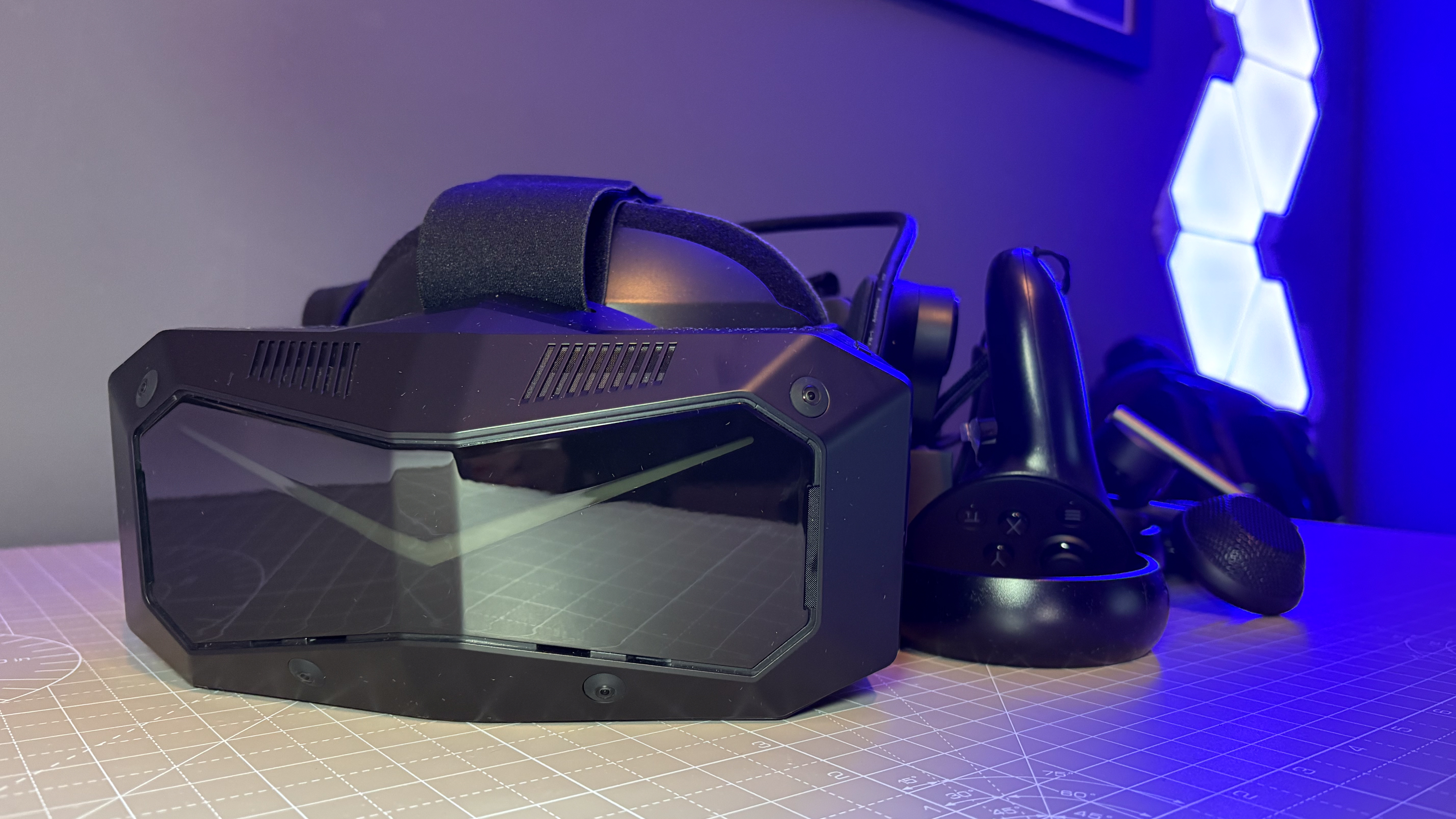
The Crystal Tremendous is definitely a fairly clunky machine in methods. It isn’t as handy, nor as snug, and whereas it does have inside-out monitoring, it is nonetheless a tethered headset requiring a PC that is in a position to deal with a really excessive decision. It seems like a VR headset that hasn’t received with the programme that even Valve, creator of the Valve Index, has ditched in favour of the streaming-first and standalone Steam Body.
However the image high quality—oh, the image high quality—is simply too good on the Crystal Tremendous to disregard. And the audio, too, from the optionally available DMAS earphones that maintain the ear speaker dream alive—probably the perfect factor concerning the Valve Index. As a headset in your common VR person, the Pimax would not make an entire lot of sense. However for an fanatic that talks slightly an excessive amount of about subpixels and display doorways, yeah, there’s loads to love. Micro-OLED is critically costly however critically good. On the very least, it is loads cheaper than the Apple Imaginative and prescient Professional.
Finest VR headsets 2026
All our present suggestions