Sword of the Demon Hunter arrives as a interval supernatural drama that oscillates between cinematic highs and oddly underwhelming monster battles. Set principally in 1850s Edo, it follows the apparently ageless swordsman Jinya as he confronts grotesque yokai whereas carrying a private vendetta rooted in love and loss. The sequence’ strongest moments are intimate, fantastically composed, and steeped in ambiance—but they sit alongside motion sequences that always miss the mark. Beneath I break down what works, what doesn’t, and why this anime is extra of a temper piece than a monster-of-the-week spectacle.
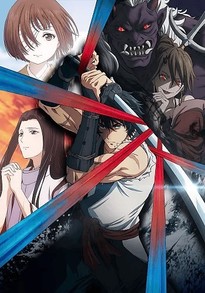
Promotional key artwork for Sword of the Demon Hunter.
Overview: A Two‑Cour Story with Cut up Id
The present is structured as a two‑cour sequence and opens with a 50‑minute premier that instantly units the next bar than subsequent episodes. That opening acts virtually as a brief movie: lush, atmospheric, and heavy with tragic romance and ritualized violence. Afterward the sequence largely settles again right into a quieter slice‑of‑life rhythm in Edo, punctuated by paid demon hunts and interpersonal vignettes. This tonal break up—sweeping cinematic drama vs. small‑scale domesticity—defines a lot of the sequence’ enchantment and its frustrations.
Episode One: Cinematic Peak
Episode one is the present’s plain spotlight. It embraces naturalistic compositions and emotional restraint, constructing to scenes of such visible and emotional readability that they outclass a lot of what follows. A scene of two lovers beside a river, framed by falling blossoms, conveys grief and restraint with the type of subtlety anime typically goals for however not often achieves. The sequence that culminates in a vividly staged homicide is each horrific and oddly stunning—an unsettling mix that lingers.
Characters and Relationships
On the heart is Jinya (initially named Jinta), a taciturn demon slayer whose human façade hides a demonic longevity. His motivations are pushed by recollections of two girls—sisters in impact—whose tragic fates proceed to hang-out him. In Edo he kinds light ties with a ramen store proprietor and his perceptive daughter Ofu, a tsundere‑leaning aristocratic lady, and a sophisticated sensible courtesan. These supporting characters deliver heat and grounded humanity to the narrative, and lots of the present’s greatest scenes are quieter conversations somewhat than battles.
Ofu and the On a regular basis
Ofu’s perceptiveness and small acts of kindness present a priceless counterpoint to Jinya’s inwardness. The present works greatest when it permits these relationships to breathe: extraordinary life, group interactions, and the feel of Edo society are the place the sequence feels most alive.
Motion vs. Slice‑of‑Life: A Pressure Unresolved
The sequence sells itself on demon slaying and supernatural stakes, but the combat choreography and monster design often disappoint. A number of set‑piece battles (notably an episode 4 encounter) land as unintentionally comical, with awkward sense of scale and clumsy animation that undermines rigidity. Later arcs proceed this sample: occasional genuinely affecting ghoul encounters sit beside uninspired, toy‑like confrontations that might match higher in campy tokusatsu than a moody interval piece.
If you reframe the anime as a interval slice‑of‑life with supernatural seasoning, many episodes develop into much more pleasant. The talky, interpersonal scenes have an intimacy paying homage to historic character dramas and sometimes reveal delicate emotional payoffs. For viewers prepared to just accept the weaker motion, the present rewards endurance with intriguing character beats and occasional narrative surprises.
Visuals and Path
Visually the anime is inconsistent. The opening episode exhibits what the manufacturing can obtain—considerate composition, expressive colour palettes, and memorable staging. In distinction, a lot of the Edo‑set materials lacks that very same flourish, counting on modest background work and less complicated course. That mentioned, the interval element in costume and setting helps promote the ambiance, and a few non‑motion sequences are fantastically noticed.
Themes and Historic Backdrop
The premise of an immortal or sluggish‑growing old protagonist residing by means of pivotal historic change is fertile floor. The sequence teases larger potentialities—Japan’s encounter with Western powers, the arrival of the Black Ships, and the social shifts that may rework Edo into trendy Tokyo. A extra formidable strategy may need used temporal jumps to point out society evolving round Jinya (comparable in spirit to tales that monitor an immortal by means of a long time), however the present episodes use historical past extra as window dressing than as a driving power.
Some episodes experiment with kind—one is framed as a stage play; one other explores a mysterious portray and hints at deeper backstory—however not all experiments stick the touchdown. Nonetheless, when the present faucets into classical Japanese motifs (as an example, variations on the Urashima Tarō story), it produces one of many sequence’ most attention-grabbing and sudden outcomes.
Who Ought to Watch?
In order for you slick, constant monster battles and pulse‑pounding motion, this sequence will seemingly frustrate. Should you recognize temper, interval ambiance, and character‑pushed scenes—and you’ll forgive a variety of campy or poorly animated combat moments—Sword of the Demon Hunter affords worthwhile rewards. Viewers who take pleasure in historic slices of life with a supernatural slant will discover extra to understand than these anticipating a straight demon‑slayer romp.
Remaining ideas
Sword of the Demon Hunter is a present of pleasing contrasts: a stunning, emotionally charged opening adopted by a quieter, uneven center that trades spectacle for intimacy. Its greatest moments are delicate and cinematic, anchored by a haunted protagonist and a heat roster of supporting figures. Its weakest moments are the motion sequences, which frequently lack the technical polish wanted to persuade. Taken as a interval slice‑of‑life that often veers into the supernatural, it’s an agreeable watch—one that may have been much more formidable however nonetheless comprises sufficient memorable scenes to justify a glance.
Notice: the sequence references historic occasions and cultural tales—just like the Black Ships—used extra as context than as central plot mechanics. For background studying on these historic components, see this overview of the Black Ships.