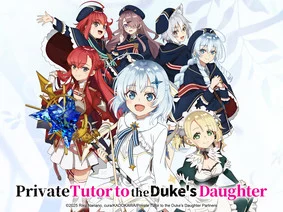
Personal Tutor to the Duke’s Daughter — promotional cowl
Personal Tutor to the Duke’s Daughter (translated title) presents a textbook instance of an isekai-adjacent faculty fantasy that leans closely into character-driven vignettes. At its core the collection follows Allen, a commoner-turned-tutor, as he tries to information a trio of feminine magic college students—most notably Tina, the duke’s daughter—via private and magical hurdles. The anime’s strengths lie in sympathetic character moments and approachable ethical beats, however its dealing with of romance, age dynamics, and pacing elevate important issues that any potential viewer ought to weigh earlier than watching.
Fast Synopsis and Setup
Allen, a talented but middling magic person from a typical background, as soon as stood to rise via the ranks of the academy. After failing an essential examination and discovering himself sidelined, he accepts a tutoring place for Tina—an aristocratic pupil with immense mana however a crippling block that forestalls her from controlling magic. The collection unfolds largely episodically: Allen meets new college students, uncovers emotional obstacles tied to household expectations or id, and helps them develop via mentorship and teamwork.
Characters and Relationship Dynamics
Allen — the reluctant mentor
Allen capabilities because the regular heart of the present: competent, affected person, and prepared to take dangers for his college students. His function as a tutor offers the narrative with a handy construction to introduce new issues and resolve them inside an episode or two.
Tina, Ellie, and Lynne — the problematic trio
The three main feminine college students share a well-recognized dynamic: they idolize Allen and every develops an intense crush that fuels each comedy and drama. Tina’s arc—rooted in emotions of inferiority regardless of nice potential—is the longest and most developed, culminating in scenes the place her emotional outbursts threaten herself and others and require Allen’s intervention.
Romantic stress and moral blind spots
The collection repeatedly frames these underage crushes as critical romantic competitors for Allen’s affection. Tina, Ellie, and Lynne are portrayed as middle-schoolers whereas Allen is an grownup and academy graduate. Story decisions—akin to bodily advances, obsessive habits, and Allen’s ambiguous encouragement—create an uneasy tone that blurs mentorship and courtship. For a lot of viewers, that is the anime’s important stumbling block: a premise that treats underage attraction as romantic risk relatively than a boundary to be firmly enforced.
Themes: Progress, Expectation, and Class
Past the romance controversy, the present tries to deal with relatable themes: the stress of household expectations, the frustration of not dwelling as much as perceived potential, and social discrimination. Situations of sophistication prejudice (Allen’s commoner background) and racial boundaries for demi-humans seem within the background and sometimes affect character outcomes, however these threads are sometimes underexplored. The narrative usually prefers private, episodic resolutions—characters discover new paths, redefine targets, or settle for themselves—relatively than growing broader socio-political commentary.
Visuals and Sound
Dialogue scenes are solidly dealt with: character fashions, expressions, and backgrounds are serviceable and do the job for quiet moments of development. Motion sequences, nevertheless, endure uneven animation high quality. Whereas the collection makes an attempt dynamic magical confrontations, the execution oscillates between bold motion and budget-driven shortcuts.
The soundtrack is unobtrusive and practical—not often memorable, however not often disruptive. Music helps scenes with out calling consideration away from character work, which inserts the collection’ concentrate on private improvement relatively than spectacle.
Narrative Construction and Adaptation Selections
The anime’s episodic “meet, reveal, resolve” construction makes it straightforward to drop into but in addition limits long-term stakes. Hints of bigger plotlines—political jealousy, institutional prejudice, or unresolved tensions between homes—are launched however typically sidelined in service of short-term character resolutions. Given the sunshine novel supply materials spans many volumes, the variation’s slender focus could disappoint viewers anticipating deeper worldbuilding or a extra coherent throughline.
Who will take pleasure in this collection?
Viewers who recognize character-focused, low-stakes fantasy with a delicate ethical core will discover moments of allure right here. The present’s episodic nature makes it cozy and infrequently comforting when it concentrates on private development and friendship.
Who needs to be cautious?
Anybody uncomfortable with romantic framing between adults and underage characters ought to method with care. The dealing with of consent and bounds—notably in scenes the place minors use manipulation or physicality to affect Allen—will likely be a dealbreaker for a lot of.
Additional studying
For background on the supply materials or launch data, see the collection entry on Wikipedia (rel=”nofollow” goal=”_blank”>Personal Tutor to the Duke’s Daughter — Wikipedia) or viewer opinions and episode guides on MyAnimeList (rel=”nofollow” goal=”_blank”>MyAnimeList — Personal Tutor to the Duke’s Daughter).
Remaining ideas
Personal Tutor to the Duke’s Daughter delivers a mix of heartfelt character moments and awkward romantic framing. Its strengths are empathetic resolutions and a reliable lead who helps others confront their fears; its weaknesses are uneven animation and a recurring romantic premise that crosses uncomfortable moral strains. For those who’re drawn to mentor-student dramas and may look previous the problematic age dynamic, there are rewarding emotional beats right here. If that dynamic issues you, nevertheless, the collection could also be troublesome to take pleasure in regardless of its in any other case strong intentions.